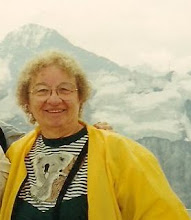
If someone had told me I’d be eating lentil soup every noontime for the two weeks I’d be in Scotland I wouldn’t have believe them. Bit that is exactly what happened.
The weather was overcast much of the time and the temperatures cool, neither of which, however, dampened our enthusiasm and wonderful time. Somehow we always found ourselves in a museum, castle, or some historic site at noon. Both my traveling buddy, Jan, and I tend to push the envelope as far as time is concerned to see and experience as much as possible.
I had an uncanny knack of glancing at my watch ten minutes before our time was up, and then we’d make a be-line for the inevitable café on the premises. Lentil soup was always on the stove, hot and ready to serve. With our limited time we didn’t have to wait for a sandwich to be made or anything cooked. On occasion I actually had to put an ice cube in my soup to cool it down enough to eat. A bowl of filling hot lentil soup and a crusty roll was a perfect lunch and in short order we were on our way.
Dubrovnik may be the best known area of Croatia for Americans, but the country offers much more than the ancient city. Croatians call their country Hrvatska. The C-shaped country with a long tail has 372 miles of coastline, as the crow flies, but 1100 miles including coves and inlets. Forested mountains, covering 40% of the country, often seem to emerge out of the clear turquoise water of the Adriatic. In my 1000 miles of travel throughout the country it seemed mountains could be seen everywhere.
Nude beaches are no big deal, and it is said that on one of the many islands a hotel receptionist greets guests wearing only a bow tie. However, I did not confirm this. Beaches tend to be pebbly and rocky, not sandy, and I understand Croats prefer them that way. I guess it's what one is accustomed to.
Dubrovnik and Zadar, suffered damage to 60% of their cities, but it appears that the coast escaped much of the ravages of the Homeland War of 1991-95.
Dubrovnik, a sea of red tile roofs, suffered much damage with 55 % of the buildings being hit by mortar shells or bombs. The wall survived undamaged. UNESCO funds allowed speedy repair and restoration of the walled city. Vehicles are not allowed in the pedestrian friendly city, but on an early morning visit to avoid crowds and heat, I did spot a small electric Coca Cola truck restocking cafés and restaurants.
History lives on in the fortified city. The 7th century canal, separating Romans and Slavs, was filled in during the 11th century, and now is the historic wide limestone paved Placa, the heart of the city. The fortification wall was added in the 13th century. The Republic of Dubrovnik was a major maritime power 500 years ago with the third largest navy in the Mediterranean. The base for a fleet of ships carrying trade to much of Europe and the Middle East was a rival of Venice.
I read that if one climbed the many stairs to the city wall at the Pile Gate the mile long walk around the city was downhill. Not so! When walking, one needs to watch his feet, and stop to enjoy the scenery, sites and the sparkling waters below lapping at the wall’s base.. My traveling friend was a bit concerned about walking because of her recent knee surgery. Walking on the wall around the city, we walked up or down 406 steps! In spite of a record hot day, it was a fascinating and worthwhile walk with spectacular views of the sparkling Adriatic.
A gal I traveled with many times nagged me for three years to go to Churchill, Manitoba, Canada to see the polar bears. I kept saying “Kelly, I don’t like cold weather! Besides I don’t have any heavy warm clothes.”
I had just returned home from hiking the Swiss Alps and was sitting at my desk when it hit me. My daughter had ski clothes that I could borrow. In hind sight, I’m amazed it took me three years to remember this. I picked up the phone and called my friend in New Jersey saying, “If you really want to go see the polar bears I’ll borrow warm clothes and go with you.”
Ecstatic she gave me the tour company phone number. I couldn’t believe it when I learned that they were totally booked eleven months in advance! So I placed another call to New Jersey and told her. “Well it’s all for not. They are totally booked for next year.”
“Not so fast gal. Give me a couple of days to do a bit of research and I’ll call you back.”
True to her word, I heard from her a few days later. Our second choice company had a couple of spots left for the following season. I begged the fellow I was talking to to hold two spots for a day or so until I could get back to Kelly, then back to him with her preferred date.
Long story short, I did, and he did, and we booked a trip for the following mid-October. There are two options to get to Churchill—fly in or take a many hour train ride from Winnipeg, as there are no roads into the city. We landed in Churchill after a new fallen snow the night before. I was warm in my heavy clothes and my feet were dry in my boots. I shoveled enough snow as a kid in New England to last me a lifetime, but it was kind of fun to just enjoy the fresh snow that was still clean and white..
I am glad I made this trip with my friend, as we had a wonderful time and she died the following May.
In all of my travels and visits to many other countries, only once have I been the victim of an attempted scam. My son and I had just finished lunch in Miraflores, a suburb of Lima, Peru where we were staying. We were walking down the street toward the waterfront when a young man walking in the opposite direction asked as we passed by, “Are you from Texas?”
That remark floored me as I wondered how he knew. Later my son said, “Mom, he saw your neck strap on your camera.” Sure enough it was a Texas A&M strap. I marveled at the stranger’s good eyesight.
He asked for lunch money, adding, “My backpack was stolen off the bus and my clothes and money are gone.”
My son refused him the money, but offered his calling card so the fellow could call his girlfriend who had been delayed picking him up. The fellow pleaded a bit more, but we held to our position. He did not want to use the calling card or make a phone call. We replied, “We’re sure sorry, but we don’t have any cash,” and continued on our way.
I muttered, “I guess we could have taken him back to the restaurant and bought him lunch.”
“Mom, he didn’t want lunch. He was just trying to scam us out of money.”
I’ve run in to a few panhandlers in various places, very pesky gypsies in Rome,and persistent hawkers in Beijing, but that was the first time I’ve ever actually been approached on the street. For one who hates to haggle to get a bargain when the asking price, by our standards, is reasonable, it was hard for me to pass on that young man. Sometimes the heart and mind just aren’t in sync.
In Budapest, Hungary, the SzechenyiChain Bridge, built in 1849, was the first permanent bridge over the Danube River.
In the 1800s Count Szechenyi went to London where he was living the life of a playboy. When his father died, he went home for the funeral, but because the Danube was frozen, he could not get across the river and was unable to attend his father’s funeral.
This experience so upset him that it changed his life. He remained home in Budapest and became one of the leading figures in the city during the last half of the 19th century. The pontoon bridge prior to the chain bridge had to be removed when ships passed, and it also was at the mercy of storms. A Scotsman, Adam Clark, was commissioned to come to Budapest to oversee the massive construction project of building a permanent bridge across the river. Clark liked the city so much, he remained there for the rest of his life.
During WW II, 80% of the city was bombed. Still the Nazis blew up all the bridges before retreating from the city. The Chain Bridge was the first bridge rebuilt after the war. It reopened in November 1949, exactly one hundred years after the first opening. Two years after the war ended, all the bridges in the city across the Danube had been rebuilt.
Once the capitol of Russian America, Sitka is a charming small town at the northern end of most Inland Passage cruise destinations. It has a fascinating history and plenty to see and do, other than shopping, to fill your day. All major sites in this walkable city can be covered . Like all small cities along the Inland Passageway, Sitka exhibits magnificent scenery.
Two things I wanted my grandchildren to see were St. Michael’s, the Russian Orthodox Church, and the New Archangel Dancers, and I wanted to hike a bit in the National Forest.
Although I visited several Russian Orthodox churches in Russia I still learned a couple of things from the knowledgeable docent. He explained the three-bar Russian cross.
I had never seen or known about a riza, an exact replica of an icon done in 3-D shiny metal. Only body parts are left uncovered. The removable riza gives a glittery view of the icon while protecting it.
During the 1966 fire, people fled to the church to carry out the 16th century icons, a 400-pound chandelier and the heavy oak entrance doors.
The U.S. Metropolitan, similar to a Catholic Cardinal, was due to arrive at . We made it back to the church to witness his unpretentious arrival.
The New Archangel Dancers perform authentic Russian dances at Centennial Hall. None of the female dancers is a professional nor of Russian heritage. They dance for exercise, fun and to keep Sitka’s Russian heritage alive though dance. As I admired their agility, I wished I could squat and kick at the same time!
It’s a short walk to Castle Hill and the 92 steps up to the site where Russia passed Alaska to the United States. There is nothing left of Baranof’s castle and the fort is little more than a wall, a cannon and an American flag. Across the street, on the old Russian parade grounds, is Pioneer House, a home for the indigent to live. Once free, there now is a sliding payment scale. The home is similar to our old Soldier and Sailor Homes.
Walking the mile-long totem loop-trail in the Tongass National Forest was a delight. We studied the 28 totems and paused at the site of the 1804 Russian-Tlingit battle.
Strolling back along
Lincoln Street—the main street—we photographed St. Peter’s by the Sea, the Russian Bishop’s house, the oldest house in Sitka, and some park statuary before stopping at a hatchery.
The SheldonJacksonMuseum was a real jewel of a find. The first concrete building in Sitka, 1895, houses Indian artifacts and history of six native Alaskan tribes. Mary Bear was on site making Christmas decorations from seal skin and elk. She showed and explained an otter head belt that is traditionally given to a girl at menses.
Each city along the Inland Passage has something different to offer, but Sitka is probably my favorite city.
Although I have never experienced any American moonshine, I have experienced home brew concoctions in several places as I’ve traveled around the world.
In Budapest we were welcomed with an aperitif glass filled with a liquid called puszta. It was explained, “Puszta is used to welcome a friend and is made with white Tokay wine, apricot brandy and bitters. It is usually homemade.” What a nice welcome and although not much of a drinker I did enjoy the drink.
In Bulgaria the brandy-like drink is called rakiu and definitely should be sipped. In Romania the home brew is a plum brandy. For some reason home brews always seem pretty potent to me.
In Davos, Switzerland I had a cherry-brandy that was really really strong. Its strength certainly could be compared to the strong grape-brandy I was handed in Croatia.
In Finland, we were offered Lakka, a cloudberry liqueur schnapps. I thought it was very good. A cloudberry looks something like a raspberry, but is salmon-orange in color and its bumps are larger.
Kir, originated in French cafes mid 19th century, is a popular drink in many places. It was further popularized by Felix Kir after World War II when he, as mayor of Dijon, served the drink to promote his region's fine wines, and the name Kir has been associated with the drink ever since. There are many variations, but generally kir is made with a 1:9 ratio of white wine, often Chablis, and cassis. I’m not sure how the restaurant owner in Nice, France made his kir but I found it pretty potent.
When asked if I drink these various drinks, I respond, “After one sip I generally can find someone close by or at my table who is happy to finish it for me so I don’t appear rude by not drinking it. There was one exception though, and that was the home-brew vodka made by the 80-year-old grandmother in Uglich, Russia. She had a magic touch and her vodka was very good.”
I’ll no doubt run into other drinks as I continue to travel and I’ll be game to at least give them a sip.
Sometimes when visiting a place there are just certain things that one must do---even if they are touristy. In County Clare, Ireland costumed knights greeted us as we entered Bunratty Castle.The main hall was decorated with large elk horns and 15-16th century tapestries. In days of old, large chests would have stated the bride’s birth date and displayed the groom’s or lord’s crest.
A handsome charming knight handed us a glass of mead as he explained, “Mead is a honey wine that has been popular since the 15h century. Made from honey it was thought to be a bit of an aphrodisiac. The bridal couple would drink a glass every evening for one moon, or one month, thus the term honeymoon.”
I liked the drink and securing a refill was no problem. (However, after returning home and buying some mead at the local liquor store, it was a disappointment. It was nowhere as delicious as the fresh mead we’d imbibed in Ireland.)
We were given only a knife as a eating utensil. Of course it didn’t take us long to realize that this would have been the only eating utensil in medieval times. And this evening this is where we were.
Dinner started with a delicious potato-leek soup. That was easy to eat! All we had to do was pick up the bowl and drink the soup. Spare ribs followed the soup and of course ribs are considered finger food. After devouring the yummy ribs we made good use of the finger bowls on the table.
The half chicken that followed was accompanied with potatoes, carrots and broccoli, all manageable with a knife. It reminded me of using chop sticks making eating a slower pace than what most Americans are used to. The pace allowed for wonderful conversation and funny comments with our dinner partners.
Come dessert time and they took pity on us and served us a spoon to eat the strawberry mousse. A perfect ending to a great meal. The food was excellent, but the wine served with dinner left a lot to be desired.
The after dinner entertainment was exceptional. The singers had marvelous voices and both the harpist and fiddle player were outstanding. It was a fun evening and a great way to bring our stay in County Clare to an end.
Hutong is a Mongolian word meaning little street. Hutongs, old residential neighborhoods, contain acres of low, flat-roofed buildings that are crisscrossed by narrow lanes. They are also known as courtyard house. As a family grew a room would be added reducing the courtyard area. Houses face east to west to catch the breezes. These ancient neighborhoods are endangered as they are being torn down and replaced with high rise apartments. However, twenty hutongs have been designated as historical sites and will be preserved. I’m glad I was able to visit Beijing, China before the 700-year old neighborhoods are gone.
The streets are laid out in a symmetrical pattern from the center of the neighborhood. The doors are square compared to the drum doors in the Forbidden City. High thresholds keep out dragons and the higher the threshold the higher the rank of the person living in the house.
The wonderful aromas of food cooking stimulated our gastric juices just as we entered the home of one of the residents. The pretty courtyard was a surprise and impressive. The residence we visited was 100 years old, had nine rooms, a western toilet and had been in the family for four generations. After a dumpling-making demonstration we had a chance to try our hand at that craft. We enjoyed a great meal while talking with our hosts.
After lunch we walked a short distance to visit a 90-year-old woman who had her feet bound at age five. The 1000-year-old custom of foot binding was outlawed in 1911, but was practiced in rural areas for some time afterward. Foot binding first started with concubines in the imperial court and spread to the city, then to rural areas. Tiny feet showed high class, and the thinking was that wealthy women would have servants to address their needs. Bound feet limited a woman’s mobility, therefore, keeping her under male control. Unable to walk long distances a woman was unlikely to get into trouble. The procedure of curling the toes under so they eventually grew into the foot was painful. The lady was charming and with some translating it was fun to talk to her.
The narrow streets cannot accommodate anything larger than bicycle trishaws which are run exclusively by hutong residents. The drivers rotate like taxi cabs do at airports.
THANK YOU, BYE! In Switzerland we all took a book along for the nearly all-day ride on the Glacier Express from Davos to Interlaken. However, the scenery was so spectacular on the world’s slowest express that none of us ever opened our book! The full trainride runs from St. Moritz to Zermatt, Switzerland.
It was an extraordinary engineering feat to build this railroad with its 91 tunnels and 291 bridges. It was a little scary to look out the window at an approaching curve and see nothing but a bridge suspended over a gorge. After awhile it became a familiar sight. As we climbed up to the pass at 6668-feet the train went so slow that I thought it might stop. Oh, no, I don’t want to roll down backwards!
The train tracks switchback between alpine valleys and mountain passes. The scenery is fantabulous and it’s got to be the most scenic train ride in the world! Oohs and ashs peppered our conversation.
At noontime the steward came to our car to inform us that it was our time for dinner in the dining car. We enjoyed a wonderful lunch complete with wine and dessert served on linen covered tables and with real silverware and linen napkins. We continued to enjoy the scenery as we dined.
Engrossed in our good time it took us a minute or two to understand our waiter as he stood at the end of the table repeating, “Thank you, bye. Thank you, bye. Thank you, bye.”
Eventually we realized our dining hour had come to an end. With a smile and a thank you to the waiter, we got up and left the dining car.
Traveling around the world has involved many different types of conveyances including subways, metros, undergrounds—whatever they are called where ever one is. When in Paris we hopped on the metro to go to Versailles. As we approached the transfer station to catch the train that would take us to our destination we made our way to the exit door and as the train stopped we waited for the door to open. It did not. Just as I was thinking about how slow the door was, a young man in the seat nearest to the door reached over and pushed down the lever or door handle.
Surprised we turned simultaneously saying thank you. Standing on the platform as the train pulled out we looked at each other and I asked, “Do you feel as stupid as I do?”
“You betcha!”
We were fast learners and had no further problems in France with the train or metro doors!
What's a Rotair?
In Switzerland, after getting tickets at the Titlis rail station we boarded gondolas. Half way up the mountain we transferred from the small gondolas to a large standup gondola for the ride to the next platform. Finally we transferred into the Rotair, the world’s only rotating gondola. Also a large standup gondola the floor rotates 360 degrees in minutes. It was pretty impressive and when we came out of the clouds the gondola was filled with a chorus of oohs and aahs. The magnificent views were awesome!
At the top of this glacier people were playing in the snow, and of course we joined them and was surprised to find it was not as cold as one would think.
When biking from Munich to Vienna we laid over a day in Linz. After a lecture on Austrian history and economy in the morning we were bused up a long steep hill to Maunthausen concentration camp. (More on that another day) I was sure glad we didn’t have to bike up that hill.
In the afternoon we did a walking tour of the city. We walked the town square and viewed the town hall where Hitler, in 1938, announced his 1000 year empire plan, then passed by the house Mozart lived in while he wrote the Linz Opera. We hiked the hill to visit the museum in the castle.
Late afternoon when we got back to the hotel I was dying for a nice big glass of ice tea, something unheard of in most of Europe. After entering the hotel I went directly to the bar and asked, “May I buy a cup of hot tea?”
“Certainly,” the young bartender replied.
After being given my tea I requested, “Now, may I have the largest container you have full of ice?”
“Really?” the surprised bartender questioned, as he gave me a strange look.
“Please. And may I take this all up to my room? I will return everything to you when I come down to dinner.”
And that is how I got my one and only delicious glass of ice tea on the entire trip. No doubt, I was probably labeled, ‘a crazy American’. But did I care? I’d had my fill of chilled juice and water. Barely chilled sodas just don’t do it for me, so I’d forgone them. Most of the world just doesn’t know that ice tea is the national drink of Texas!
I've been indulging my passion for traveling since retirement in 1992. I've traveled independently as well as with over 30 companies, a couple several times. I've hiked, biked, done service projects,intergenerational trips, sailed small boats, rafts as well as large cruise ships, done the bus, vans,puddle jumpers, helicopters and of course big planes. Now in my late 70s and with increasing travel hassles I'm cutting annual trips down from 4 to 2 a year.
After writing three travel books plus two for children I've decided that is enough. My middle-age children started in on me to blog instead. I do still have so many stories in my head that I decided to enter the 21st century ,so here are more of my stories.
Wet feet, who has rubbers these day? To dry wet shoes put crumpled newspaper inside the shoe and it will wick out all the moisture. If you expect your travels to take you where your feet are likely to be walking in puddles or streams, pack a section of newspaper in the bottom of your suitcase.
In many places in the world the tip is included in the restaurant bill---good to know!
In Europe bathrooms are referred to as WC or toilet. Any other term is not understood.
When hiking, stop to tighten shoe/boot laces before starting down hill.
When traveling by plane be sure to wear all cotton clothing, which today is no problem. In case of fire, man-made fibers melt, cotton burns instead, leaving a clean burn vs one with all kinds of junk melted into it.
Didn't expect a sunburn and have no Rx for it? Dab the area with a cool wet tea bag. the tannin in the tea will reduce inflamation.
I bet you travel with a small bottle of hand sanitizer either in your purse or pocket. Did you know that when you spill something in your lap or wear part of your lunch that a few dabs of hand sanitizer on the spot will make it disappear like magic!
Speaking of shoes, I do not recommend removing them on a long flight. Untie and loosen them. I have actually seen people not be able to get their shoes back on because their feet have swollen during a long flight. Oach!
As painful as it may be limit yourself to two pairs of shoes. You are not traveling to make a fashion statement. Wear your heavest pair which should be a good pair of walking shoes. Pack a lighter pair or sandals.
Make a copy of all your documents and credit cards before leaving home and carry seperately. Also before leaving home leave a copy of your itinerary including hotels and their phone numbers and dates of stay with a family member.
It's always tempting to take a sleeping pill on a long overseas flight, BUT I never do because in the unlikely event of problems I want to have all my senses about me!
Afraid of bedbugs these days? Carry a small squirt bottle of lavender along with your other liquids. Spray your pillow and around your bed and mattress. This will give you a good visual and also repel the little devils.
I carry a couple of aspirin in my pocket and once the plane is in the air I swallow one. I feel this is especially important on long overseas flights to avoid leg problems.
If you do need to do laundry when traveling wring it as dry as possible by hand, then lay the article flat on a bath towel and roll tightly. Unroll and hang. It should be dry by morning.
I carry a small empty water bottle when traveling. I place it in the tray along with my plastic bag of liquids. Once through security I fill it from the water fountain. I always have water to take a pill or a drink when I'm thirsty.
Beware that European bath tubs are very deep and water is often scalding hot. Be careful especially if you have hip or knee problems.
If you're going to be gone more than a few days water your indoor plants well then cover with a large plastic bag tucking the edges well under the pot. If you use a laundry bag simply knot the area where the hanger protrudes. When you return your plants will be healthy and well.
In the largest print possible print your last name and hotel on a sheet of paper and place it on the top of your clothes before closing your suitcase. If your bag gets way laid hopefully it will make it to your hotel.
If you are the owner of the common black bag personalize it by adding various cut outs from colored duct tape. It will be easier to identify than if it carries a bit of ribbon.