Showing posts with label BC. Show all posts

Sunday, August 2, 2015

BUCHART GARDENS

                        An Old Quarry Turned Gorgeous

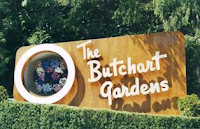
    Butchart Gardens, located pretty much half way between Victoria and Vancouver, BC are simply gorgeous and the grand daddy of gardens in an area full of gardens. One of the most beautiful gardens in North America, it is said to be the most photographed one. A strange thing happened when we visited the gardens my second (of 3) time. Everybody slowed down. People talked softly, waited patiently while people finished taking their photos, and slowed their pace. It was most refreshing.
        Located in an abandoned limestone quarry, the gardens cover 50 acres of the 130-acre estate. Tulips were in bloom everywhere---there were only 60,000 bulbs! Fifty gardeners are kept busy full time year-round in the gardens to ensure continuous color. Each morning before
the public is admitted, gardeners survey the gardens and dead head any plants that are beginning to fade.
       The rose garden has 2500 rose bushes of 250 varieties. It was a bit early for rose blooms, but the plants were all in bud. The gardens are beautiful any time of year as many plants are always in bloom.          Many people have wanted to buy the gardens, but it simply is not for sale and has been in the family for 100 years. Mrs. Butchart appreciated the money earned from the quarry and her husband’s cement business, but thought that the quarry was a blight on the landscape. People told her nothing would grow in the quarry, but did she prove them wrong!
       There are many benches around the gardens for one to sit and contemplate awhile. A restaurant and cafĂ© are on the premises. A lovely gift shop occupies part of the original home.
      The gardens were left to a grandson who was quite literally married to the gardens. His wife lived in a home in town, but he stayed in a cabin in the gardens. They did put on a good public marriage. When he died, a brother took over the gardens, but he died three years later. However, he was the one who designed the fountain in the large pond. Now a sister runs the enterprise.
       The Butcharts started planting flowers, shrubs, and trees in 1904 from their extensive travels. The couple, always the gracious hosts, named their home Benvenuto, Italian meaning welcome.
       The 50 acres include a Rose Garden, Italian Garden, Japanese Garden, Stage Show Garden, and a Sunken Garden.  In 1953 lights were added to illuminate the gardens at night. At night, lights make the Ross Fountain a spectacular shimmering fantasy as its waters soar 80 feet into the air.  
        In the patio area near the gift shop stands a large 1620 bronze boar, named Tacca. He is a copy of an original that is in the Straw Market in Florence, Italy. The Butcharts purchased him on one of their European trips. The unique posture of Tacca suggests neither attack nor repose, but instead that he was awakened suddenly by the sound of the hunt. Years later a pond was added at the base with bronze plants, frogs, snakes, and turtles. His snout is finely burnished by thousands of visitors who have given him an affectionate rub for good luck. He is dedicated to all the children and animals who visit Butchart Gardens.
       My last visit to the Butchart was an evening one. It was a bit of a disappointment after having seen the gardens twice before in the daytime. The paths were not well lit which made one walk carefully and the gardens lost a lot of their color and beauty. It also was harder to comprehend the whole layout of the area. If it had been my first visit I may have been enthralled, but in my opinion, daytime is a much better time for viewing.


Sunday, July 26, 2015

VICTORIA, BRITISH COLUMBIA

                                  A Charming City

    Victoria is located on the southern tip of Vancouver Island, across the Strait of Juan de Fuca and Washington’s snow capped Olympic Peninsula. This island city is a romantic, quaint seaport. Victoria enjoys mild Mediterranean weather with low humidity and off shore breezes, and gets 20-25 inches of rain a year, about a third of Vancouver’s rainfall.
The city, named for a queen, is known as the City of Gardens, and beautiful gardens bloom year round. Elaborate rose gardens flourish in the mild climate. Down town, baskets of flowers hang from the 19th century lampposts in summer, sprouting about mid-May. They add beauty and atmosphere to the waterfront of the already charming city.
In 1843 Victoria was settled as a political choice to secure an English border with the US. Actually Victoria sits below the American-Canadian border.  The city flourished when gold was discovered in 1858.  Gold seeking miners outfitted at Fort Victoria in the mid 1850s. During the gold rush there were 57 offenses that demanded hanging. It was a booming colonial city in the late 19th century---until Vancouver was established in 1880s. James Douglas became the first Governor. He gave the city 150 acres of land which now is Beacon Hill Park. Established as a Hudson Bay Company Fort the city is a mix of old England with a proud history and British customs.
The first commercial brewery in Western Canada was established in the 1850s and was in operation before the first lighthouse. There are many vineyards on Vancouver Island making for a burgeoning wine industry.
  Today horse drawn carriages trot past stately legislative buildings.  Historic Fort Street is known as antique row in this modern metropolitan city.  London-style double-decker buses transit the city on a regular basis. Pedicabs and ferries are also available. Local transportation is frequent, reliable and easy to follow, and walking the compact city is easy as well. Float planes take off every 2-3 minutes making for a busy harbor.  This wonderfully preserved frontier town sits in a beautiful scenic seaside locale. Victoria is the island’s largest city as well as the Provincial capital. The rest of Vancouver Island is rural to wild.
The Gorge is a long body of water, a tidal basin, that at the turn of the century was the playground for well-to-do Victorians. Many lovely old Victorian homes were in the area. Unfortunately only a couple remain. 
Lt. Governor’s house has 35 acres of gardens! Budget cuts years ago transferred all the gardeners from the house. After twelve years of neglect the gardens were in a sad state of disrepair. In 1990 a large group of volunteer gardeners was organized who now care for the gardens that are again lovely. Several volunteer gardeners were working the morning we visited and I had a chance to talk to a couple of them. The city parks have unionized gardeners and do not encourage any volunteering----what a shame!
The University of Victoria’s gardens were exquisite! Azaleas and rhododendrons were in full bloom, in every color. Some of the rhododendron blossoms were the size of a large dinner plate, and standing six feet tall they were a magnificent sight!
It seemed every home in the city had a flowering garden of some size and they obviously take great pride in their landscapes
Oak Bay, which is one of Victoria’s most British-looking villages/ neighborhoods. Many of the homes were built from stone used as ships’ ballast. Much of the iron trim was also used as ballast. Many old stone walls are still standing and were lovely. We wandered around a bit in some of the shops, and the last evening we had dinner at the Blithering Pub in Oak Bay. In one area of town each street is lined with a different kind of tree. Most neighborhoods in Victoria have lovely old trees. Each little village has its own small grocery store and local pub, both of which are part of the village charm.
Craigdarock Castle
Early railroad and coal barons built many luxurious castles in Victoria. Robert Dunsmuir emigrated from Scotland and became an empire building coal baron. He built Craigdarock
Castle, a lavishly furnished 39-room castle in 1887.  The stained glass windows in the castle were exquisite. The ornately carved woodwork was beautiful as were the fireplaces, pink granite columns, stone turrets and the parquet floors, with a different design each room.
We climbed the 87 steps to the top of the tower, which rewarded us a good view of the city below. We stopped on each floor to view various rooms. We descended down stairs that led through the servants’ quarters.
The original estate extended to the water covering 28 acres. Mr. Dunsmuir died months before the majestic castle was completed, but his wife and children moved into the castle and lived there until his wife, Joan, died in 1908. At that time the castle was a white elephant that no one wanted. Eventually the acreage of the castle was subdivided into 120 lots and sold.  
 Over the years the castle has been used as a military hospital, housed Victoria College, the School Board offices, a conservatory of music, and finally today is an historic house museum.
Victoria is a charming city with a lot of history and much to see and do.

Visit post 8-8-12 to read all about the fantastic Parliament bldg
            Post    10/27 /13 for a look at the Empress hotel and hi tea there.


Sunday, July 19, 2015

VANCOUVER, B C, CANADA

                       A Melting Pot of Peoples
           Vancouver, a city of two million, unites urban excitement with outdoor adventure. Surrounded on three sides by water there are some areas where the mountains literally meet the sea. Walking trails along the water surround down town. It is an exciting, busy, cosmopolitan, healthy, fairly quiet, clean city that is pedestrian friendly. Downtown is easy to walk and distances are short.
The year round balmy climate is perfect for the plentiful lush parklands. Exquisite formal gardens contrast with bold architecture throughout the city. Recreational facilities are abundant throughout the city.  The city is a mosaic of people, cultures, food, and language. The rich combination of cultures from around the world has brought the best of native cuisine to Vancouver with the 4000 restaurants, bistros, and cafes serving 25 different kinds of food. We had wonderful Asian meals and after each said we’d have to return to that restaurant, but the next one was just as good and we never visited the same restaurant twice!
Today the city is one of immigrants with many Chinese, Japanese & East Indians. Between 1881-1885 17,000 Chinese arrived to work on the railroad, mines, (copper, zinc, lead, coal and gold) canneries, and to serve as house servants.  The 1885 Chinese Immigration Act prohibited the Chinese a vote, able to lease land, or to choose a profession.
Japanese arrived in large numbers in 1886. They worked in the herring and fish industry, in the mills, on farms, and opened shops and stores. By the 1890s the original Musqueams and Squeamish peoples saw their life style disappear.
By the turn of the century Vancouver had become the financial, transportation and supply center of British Columbia. Salmon canneries boomed and the demand for paper & pulp created 100 new forestry companies in 10 years. Between 1910-1912 the population swelled from 27,000 to 122,000! Streetcars traveled over 250 miles of track. Roads were brick, macadam, or mud. High-rise buildings---4-5 stories high---started to emerge.
The West End is densely populated with 40,000 people living there, which translates to 625 people per square kilometer. That compares to 4.5 people per square kilometer in all of British Columbia! Here people walk to work. There are no freeways in the city, they all end just outside the city.
British Columbia is larger than Texas. There are 197 Nation Bands (indigenous people) in the province. If you remember that the north to south roads in the city are streets, and the east to west roads are avenues, it is easy to find your way around.
It was immediately obvious that glass towers and spires dominate the city’s skyline. Many of the glass buildings were built when the city hosted the 1986 Expo. Dark glass indicates that the building was built in the ‘60s and ‘70s. The later buildings have lighter glass.
The classical columns of the Vancouver Art Gallery, the art deco detail of the Marine Building, and the Roman echoes of the Vancouver Public Library temper the glass-sheathed business towers. The Marine Building, built in 1929, now has the only art deco remaining in the city. The depression hit the city hard resulting in much unemployment and many bankruptcies, and in the early 1930s the Guinness family (of liquor fame) bought the building for $900,000. In 1933 the first four floors (of 20) were leased out.
The Gothic revival tower on the Holy Rosary Cathedral, built in 1900, is 66 meters tall and contains eight bells that are still rung by hand.
The Hotel Vancouver built in 1887, was replaced in 1916, and replaced again in 1936. Until 1972 it was the tallest building in the city.
An exotic mix of ancient aboriginal settlements mix with ultra modern high rise buildings to surround the beautiful and busy harbor. The port of Vancouver, stretching 145 miles along the Burrard Inlet, is the largest in North America
The Sea Bus Terminal is in the old Canadian Pacific Railroad building, just at the edge of Gastown.
Canada Place with its five distinctive white sails is the ship terminal. A million people a year pass through the terminal on cruise ships on their way to Alaska.


More Vancouver next time.
Check posts 11/3/10 , 3/9/11 , 7/20/11 for more info

Sunday, November 17, 2013

BRASS FIGURES TO PET SHINY

                       Good Luck Brass Figures
The first brass figure I came across 25 plus years ago was Tacca on my first trip to Victoria, BC. He sat in the patio area near the gift shop at Buchart Gardens. A large 1620 bronze boar, he is a copy of an original that was in the Straw Market in Florence, Italy. The Bucharts purchased him on one of their European trips.
The unique posture of Tacca suggests neither attack nor repose, but instead that he was awakened suddenly by the sound of the hunt. Years later a pond was added at the base with bronze frogs, snakes, and turtles among the plants. His snout is finely burnished by hundreds of visitors who have given him an affectionate rub for good luck. He is dedicated to all the children and animals who visit Buchart Gardens. I gave him a pat years later but  my last visit to the gardens was at night and I somehow missed him.

The statue of a little dog is one of the most photographed statues in Edinburgh, Scotland. The little Skye Terrier was the dog of an Edinburgh policeman known as a bobby. For five years he accompanied his master on his rounds all over the city. Then the policeman died. The gates to the cemetery proclaimed NO DOGS, and the gates were shut the day of the funeral before the little dog could get through them.
Each day after the one o’clock cannon firing at the fort above the Royal Mile the little dog walked to the coffeehouse his master often frequented. He was given a few scraps to eat, then he’d return to the cemetery to guard his master’s grave. After the first day when the cemetery caretaker found him and realized the dog was Greyfriars Bobby he ignored the no dogs rule. Every day for ten years the little dog would repeat his routine. Often on very cold winter nights a caring person would give him shelter in their home. When the little dog died, an exception was made to allow him to be buried beside his master. The little brass replica on a post on the Royal Mile is a favorite photo op.

At one end of the small park in Kiev, Ukraine stands a bronze statue of a little cat whose ears and
tail are shinny from the many rubbings they have received---a sign of good luck. Years ago the little cat smelled smoke and scratched the security people to warn its owners of a fire in time for all of them to make it to safety. But in all the confusion the little cat was forgotten and died of smoke inhalation.
 
In Havana, Cuba there is a life-size bronze statue of a French gentleman standing on the sidewalk outside Basilica Manor.
To touch either his beard or hand is supposed to bring good luck. Both were shiny from much rubbing.

I’ve seen many many statues in my travels, but these are the good-luck charmers of which I have fond memories.