Lovely Rainforests
Besides visiting, seeing
and playing in several rainforests over the years I have had occasion to stay
and live in three. Each experience was a wee bit different but all were
fantastic !
The Daintree Rainforest, a
World Heritage Site in Australia, is a coastal rainforest that runs in pockets
for 450 kilometers, and as an upland rainforest the area protects 70 animal
species, over 200 bird species, including the cassowary, which I’d never seen,
plus many flower and plant species.
My large cabin had lovely
wooden floors and a large sitting area with huge picture windows—the
equivalent of glass walls that provided
views of nothing but thick lush greenery. I woke early in the morning to the
sounds of nature and enjoyed my coffee sitting on the couch watching dawn
arrive and the small birds and critters shake off sleep and eat breakfast.
Eventually I waved a fresh cup of coffee under my friend’s nose to wake her so
she could also enjoy the beginning of a wonderful day.
Great care had been taken
designing this resort to blend in with its surroundings in an ecologically
sensitive way. Meant to have minimal impact on local flora and fauna, all cabins were built high on set poles, that required minimal removal of trees.
Boardwalks eliminated the impact of pedestrian traffic that can damage the forest floor. The
facility had its own water supply and generated its own electricity.
We hated to leave this
fabulous peaceful place, but Australia is a huge country and after
a couple of days it was necessary, as we still had much to visit and see.
In Costa Rica, Chachagua’s
hotel was located in the depths of the rainforest on a private preserve,
relatively close to Arenal volcano and adjacent to the Monteverdi Cloud Forest
Reserve.
We crossed a waterfall and walked through lush
vegetation to reach our cabin. Because the cabins are hidden in their
environment, our guide walked us to our cabin the first time. Our cabin was
large and the bathroom floor was slated wood; there were many potted plants and greenery
inside under the high windows. The wet rainforest created a lot of mildew on
walkways and stairs. The scenery was exquisite and I fell asleep to the sound
of running water. Howler monkeys woke us early in the morning, then the singing
birds followed and they were a lot more melodious!
One evening while walking
back to our cabin I heard this loud noise that sounded like a single knock on a
clay pot, which I learned the next morning was a ting frog talking.
The lodge dining room was a
large railed patio, roofed but all open otherwise with lovely wooden floors.
Nature was all around us at every turn!
The resident green macaw, would perch on the patio rail, almost always visiting close to mealtime. He
was free to fly anywhere anytime. He was a bit cantankerous as its mate had
died a few years before. Macaws mate for life so more than likely she’d be
alone for the years ahead. The food was fantastic—a huge surprise for
hotel/lodge fare.
This pleasant Costa Rican
jungle and its lovely eco-lodge provided us an authentic immersion with nature
without sacrificing quality or luxury. We could have stayed a lot longer!
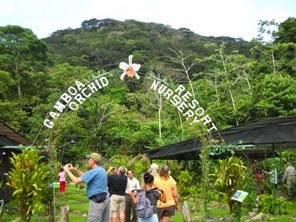
In Panama we stayed in the rainforest at a new eco-lodge. Our patio with its nice big easy wooden rockers and slung hammock looked out on a cove of the Panama Canal river. The facility was large with a large dining building, A short hike in the back was a lovely orchid and botanical gardens. The butterfly house fascinated my grandchildren. This facility was close to a Eros village with easy access by boat. Some American money had been invested in this native village and I'm not sure the easy access is necessarily good for the native peoples as slowly but surely their culture is being impacted. My grandchildren did have a wonderful time playing with the small native children. This rain forest was the least interesting and was located in a less dense environment than some others.