Showing posts with label Canberra. Show all posts

Sunday, November 6, 2016

Trivia---3

Pilgrims
Lhasa, Tibet is a mecca for Buddhist pilgrims. It is a common sight to see them walking the streets twirling a prayer wheel in their right hand and fingering a 108-bead rosary with their left hand while muttering a mantra. At the Jokharg Temple people were prostrating themselves at the temple as well as around the temple square. People paid them no mind. It was also common to see monks clad in their traditional robes all around the city.

A Gorgeous U S Embassy
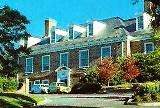
Canberra, Australia’s capital, is a one company town. The government owns all the land. One exception to land ownership is the ten acres the US embassy sits on. Australia deeded this land to the US for its help in World War II. The Embassy sits on the highest knoll. All of the red brick in the colonial building was imported from the United States. I’ve seen some really ugly embassies around the world. This one is a delight!


Didn’t Understand a Word
In Moscow we were trying to find a store to buy bottled water. We thought we were following the directions given to us, but to no avail. We asked a young man on the street for clarity. He decided to show us and all the way down the street he carried on constant chatter in Russian, none of which we understood. We kept shaking our head and at the end told him thank you. We did find the store and made our purchase, and fondly remember that kind man.


Magnificent Tapestry
In the great hall of the parliament building in Canberra, Australia hangs one of the world’s largest tapestries. Measuring 20 x 9 meters, it weighs 400 kilos, uses 360 colors and took 2 ½ years to complete. From a distance, it appears to be an oil painting. Only on close inspection is it evident that it is truly a tapestry—a really magnificent one!


Bosnia’s Friendship Bridge
The 1556 stone bridge, spanning the Nevetva River replaced the original wooden bridge. Serbs destroyed the bridge during the recent 1990s war. The stone for the replacement bridge came from the same quarry as the original stone.
Croats live on the west side of the river and Muslims on the east side. The city is internationally known for its Old Town Bridge. It is a symbol of reconciliation, cooperation, and coexistence of diverse cultural, religious, and ethnic communities. It was nice to see the bridge replaced looking exactly as the ancient one had.

Warwick Castle
Of all the castles, forts, and palaces I’ve visited Warwick Castle in Warwick, England was one of the loveliest. A few years ago Madam Tussand bought the castle. Her life-like wax figures made the castle come alive. I actually did a double take when I saw the maid drawing her lady’s bath. Her bending over the tub and the running water looked so real.

Sunday, April 12, 2015

CANBERRA, AUSTRALIA

                       Australia’s Capital
       In 1901 when all the states joined as one federation, even though each state had a capital, it was apparent that the country also needed a capital. Stiff competition developed between Sydney and Melbourne for the honor, but Canberra was chosen for its inland location, its clean air and water, for security reasons, and to put an end to the bickering between the two large cities.
    The 900 square miles of prime sheep country is in a valley known as the plains of Yass, and is about equal distance from both Melbourne and Sydney. It is known as the Australian Capital Territory or A.C.T. for short.  The Aboriginal word canberry meaning ‘meeting place’ was changed to Canberra. The city is referred to as the bush capital, city of the grey flannel suit, monument valley, or the garden city of the commonwealth----depending on the view of the speaker.  And the inhabitants say, ‘To know Canberra is to love it’.
    The city is a totally planned one. After an international competition, Walter Burley Griffin from Chicago was chosen as the architect to design the city. Griffin arrived in Canberra in 1913 to supervise construction. Two World Wars and the depression slowed progress and by 1947 Canberra still was a country town of 15,000.
    Griffin envisioned a spacious city, a city that could breathe. Development was rapid in the 1950s and the city built for 50,000 is now home to 300,000, with suburbs all around it. 
    Lake Burley Griffin was originally planned as three small lakes, but was built as one large lake with three bridges dividing it. The impression of the city is one of calm and order as well as spaciousness. The streets are wide. Because the city was built on the plains originally there were no trees. Thousands of trees have been planted every year and now the city boasts of 11-15 million trees, all planted by hand! Normal rainfall is 64 inches a year.
   Major public buildings are built on low knolls around the lake. There are no billboards. All colors are muted and generally all buildings are low. Canberra is a one company town and the government owns all the land; 65% of the city’s work force are government employees. The rest are in service industries.
U S Embassy
    One exception to land ownership is the ten acres the US embassy sits on. Australia deeded this land to the US for its help in World War II. The Embassy is the largest and sits on the highest knoll. All of the red brick in the colonial building was imported from the United States.
    There are numerous embassies and high commissions of traditional and unusual design in this capitol city. Countries related to the Motherland have high commissions instead of embassies.
    The top of Mt. Ainslie Pat provides a fantastic view of the city and suburbs!
    The Telstar tower rises 195 meters above the summit of Black Mountain. Opened in 1980, it is a major tourist attraction, although its primary function is to provide essential communication facilities.
    The new parliament building cost the country a billion dollars to build. Opposition to tearing down the old parliament was so fierce it remains standing intact in front of the new building making a nice contrast. The new parliament is actually five buildings joined together with glass link-ways; we walked only some of the 23,000 granite slabs covering the curved areas; the hallways total 20 kilometers.
   The foyer of the parliament building with its wide curved stairways is a show place. The masonry and timber used throughout is beautiful. The 81-meter flagpole is a central landmark of the city. The great hall houses one of the world’s largest tapestries, measuring 20 x 9 meters and weighs 400 kilos. Using 360 colors it took two and a half years to complete. From a distance it appears to be an oil painting. Only on close inspection is it evident that it is truly a tapestry—a really magnificent one!
  Canberra is not high on many tourist agendas, but our time there was interesting and the visit was a worthwhile one. It is a pretty capital city without the trappings of junk-stuff so often found.